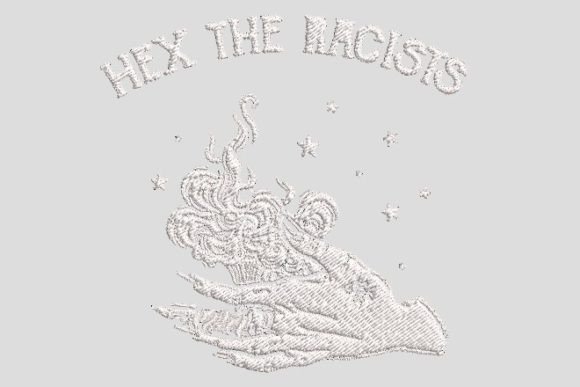
Hex the Racists Hand Horror Embroidery
A Designer’s First Look: Bold, Unapologetic, and Built for Impact
When I opened Hex the Racists Hand Horror Embroidery, my first thought wasn’t about stitch count or hoop compatibility—it was about intention. This isn’t a cute pumpkin or a playful ghost. It’s a hand—stylized, slightly distorted, with sharp lines and implied motion—framed by bold, gothic-inspired lettering that lands like a declaration. The mood is urgent, satirical, and deeply rooted in Halloween’s tradition of subversion. As a designer who’s stitched everything from nursery-themed tea towels to boutique sweatshirt collections, I immediately saw its natural home: not on baby onesies or wedding favors, but on statement pieces—tote bags for activist collectives, aprons for inclusive bakeries, or limited-run patches for craft fairs where values and visuals align.
How It Stitches in Real Life (Not Just in the Preview)
I tested Hex the Racists Hand Horror Embroidery on three real-world substrates: a medium-weight organic cotton tote, a 100% cotton unisex sweatshirt, and a linen-cotton blend pillow cover. On the tote, the design held crisp edges without excessive density—no puckering, no thread breakage. The satin-stitched outline around the hand gave it definition, while the fill stitches in the letters stayed clean and legible at 4.5" wide. On the sweatshirt, I used a medium tear-away + cut-away hybrid stabilizer, and the result was professional: no shadowing, no distortion from fabric stretch. That said, I’d hesitate to place it on thin jersey tees or lightweight baby knits—the letterforms are tight, and small details (like the subtle cracks in the palm) rely on consistent tension and support.
Where It Shines—and Where It Needs Extra Care
- Best for: Tote bag design, sweatshirt embroidery, embroidered patch production, holiday embroidery for adult audiences, and small shop product lines with clear brand voice.
- Use carefully on: Curved surfaces like caps (the hand shape doesn’t wrap well), textured fabrics like bouclé or heavy burlap (fine lines may blur), and dark fabrics unless you confirm thread color contrast in your digital embroidery file preview.
- Avoid for: Baby embroidery, personalized gift items for mixed-audience settings (e.g., school fundraisers), or commercial embroidery projects where brand neutrality is required.
What It Adds (and Doesn’t Add) to Your Finished Product
This isn’t just decoration—it’s editorial. When stitched onto a handmade tote bag sold at a local co-op, Hex the Racists Hand Horror Embroidery elevates the item from craft to conversation starter. Customers notice it. They pause. They ask questions. That kind of engagement is gold for Etsy sellers and creative entrepreneurs building authentic connections. Visually, it reads clearly from 6 feet away, thanks to strong negative space and deliberate weight distribution—no tiny running stitch accents competing for attention. But it doesn’t pretend to be versatile. It won’t soften your brand aesthetic; it will sharpen it. If your shop sells whimsical woodland-themed embroidery files, this design stands apart—not as a mismatch, but as a deliberate pivot toward purpose-driven design assets.
Practical Notes Every Embroidery Designer Should Check
Before stitching your first batch—or listing a finished product online—run through these checks:
- Test on scrap fabric first, especially if using layered stabilizers or blending thread colors.
- Review stitch density in your embroidery software—dense fills can overwhelm lightweight materials, even if the file looks fine in preview mode.
- Confirm hoop size requirements before digitizing or resizing. Some versions of this design may push standard 4x4 hoops; don’t assume.
- Inspect small details like the fingernail curve or letter serifs—they’re part of the design’s personality, and they’ll vanish on low-res machines or poor stabilization.
- Test black-and-white mockups alongside color versions—this design relies on contrast, not palette.
- Check licensing terms before selling finished products or bundling the digital embroidery file in craft business kits. Since it’s listed under Freebies, verify whether commercial use is permitted, and whether attribution is required.
Why It Works for Small Shops—and Why It Might Not Fit Every Shelf
As an Etsy seller myself, I’ve passed on dozens of “Halloween” embroidery files because they’re forgettable, over-digitized, or too generic to stand out in search. Hex the Racists Hand Horror Embroidery avoids that trap entirely. Its voice is distinct, its execution confident, and its relevance tied to cultural moment—not just calendar date. For a small shop owner curating holiday embroidery with meaning, it’s a rare find: a machine embroidery design that supports both craftsmanship and conviction. That said, it’s not a drop-in asset for every project. It demands context. A kitchen towel with this stitched front-and-center? Maybe—if your brand is boldly political. A child’s backpack? No. Clarity of intent matters more than versatility here.
Final Thought: Design With Purpose, Stitch With Confidence
This isn’t background decor. Hex the Racists Hand Horror Embroidery is a focal point, a signature, a quiet act of resistance made tactile. When used intentionally—with the right fabric, stabilizer, and audience—it transforms a simple embroidered patch or tote bag into something memorable and meaningful. For designers, crafters, and creative entrepreneurs who value substance alongside stitch quality, it’s less of a “freebie” and more of a responsibility: to use it well, test it thoroughly, and honor the weight behind the hand it draws. Before you load it into your machine, ask yourself not just *can* I stitch it—but *should* I, for this project, this customer, this moment?